As I continue preparing for CompTIA Security+, I recently learned about virtualization, application containerization, and SCADA.
These are topics I had come across before, but studying them properly helped me understand how they are used in real-world environments and why they are important from a cybersecurity perspective.
Virtualization
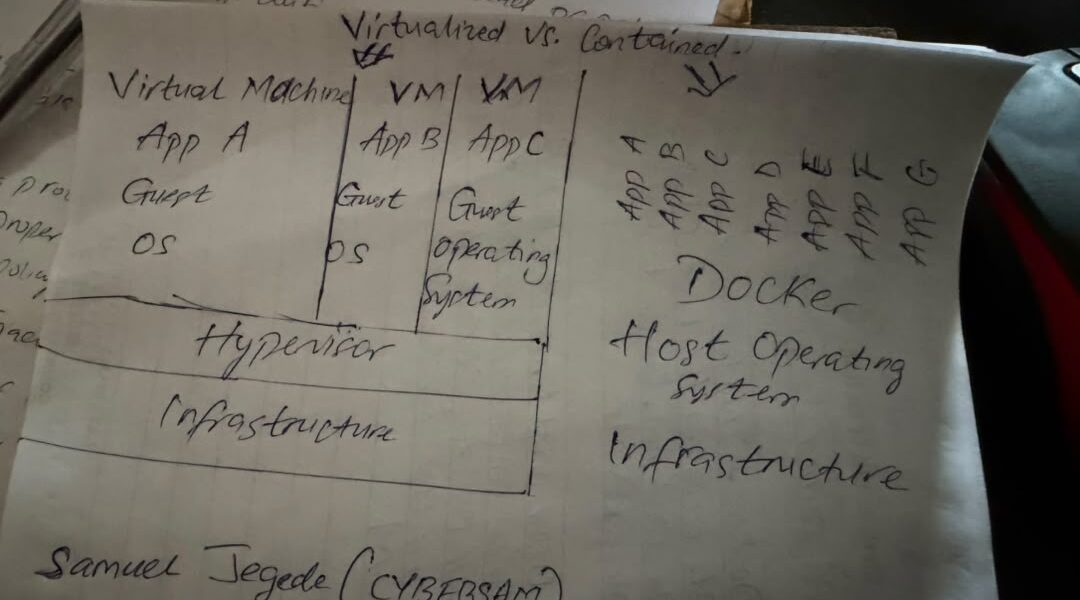
I learned that virtualization allows us to run multiple virtual machines on the same physical hardware.
Instead of having one physical server dedicated to one operating system or workload, virtualization allows that physical machine to host multiple virtual machines.
Each virtual machine can have its own guest operating system. This means different operating systems and applications can run in isolated environments on the same physical infrastructure.
For example, one physical server could host several virtual machines. One VM could be running Windows, while another could be running Linux.
The physical infrastructure provides the actual hardware resources, such as the CPU, RAM, storage, and network resources.
Then we have the hypervisor.
The hypervisor is responsible for managing the available hardware resources and distributing them among the different virtual machines.
This allows multiple VMs to operate on the same physical hardware while remaining logically separated from one another.
However, virtualization also comes with some overhead and complexity. Since every VM needs its own guest operating system, it generally requires more resources than a containerized environment.
Application Containerization
Then I moved on to application containerization.
Containerization also allows multiple applications to run on the same physical hardware, but it works differently from traditional virtualization.
With virtualization, every virtual machine has its own guest operating system.
With containers, multiple containers can share the same host operating system kernel.
This is one of the biggest differences between the two.
A simple way I understand it is:
Virtualization → Virtual Machine → Guest OS
Containerization → Container → Shared Host OS Kernel
Because containers don’t need a complete operating system of their own, they generally require less overhead and can start much faster than virtual machines.
Docker is one of the technologies used for containerization.
The Docker container engine provides the runtime environment and manages containers on top of the host operating system.
This makes it possible for applications to run in isolated containers while sharing the underlying operating system resources.
From a cybersecurity perspective, understanding this difference is important because the security considerations are not exactly the same for virtual machines and containers.
SCADA
I also learned about SCADA, which stands for Supervisory Control and Data Acquisition.
SCADA is commonly used in industrial environments where physical processes, machinery, and critical infrastructure need to be monitored and controlled.
Think about environments such as manufacturing plants, power generation, water treatment, energy, and other industrial facilities.
SCADA systems can provide real-time information about what is happening within these environments and can also be used to control certain industrial processes.
This is where cybersecurity becomes particularly interesting.
In a normal IT environment, an attacker gaining access to a system might result in stolen information, compromised accounts, or disrupted services.
But in an industrial environment, the consequences can potentially go beyond data.
Imagine an attacker gaining unauthorized access to systems involved in controlling power generation or industrial machinery.
The result could potentially affect equipment, operations, and even human safety.
This is why segmentation and isolation are extremely important in industrial control environments.
SCADA systems and other industrial control systems need carefully controlled communication and access.
External access should also be strictly controlled because exposing critical industrial systems unnecessarily can increase the attack surface.
Another thing I learned is that industrial environments cannot always be treated exactly like normal IT environments.
Some systems may be difficult to patch, restart, or take offline because they support critical operations.
Taking an industrial system offline without proper planning could disrupt production or create safety concerns.
Because of this, security teams have to consider availability, safety, and operational requirements when applying security controls.
This is where concepts such as network segmentation, isolation, access control, and controlled connectivity become very important.
The more I learn about cybersecurity, the more I realize that cybersecurity isn’t only about protecting computers and data.
Sometimes, you’re protecting the systems that control the physical world.
Still learning. Still building. 🔐